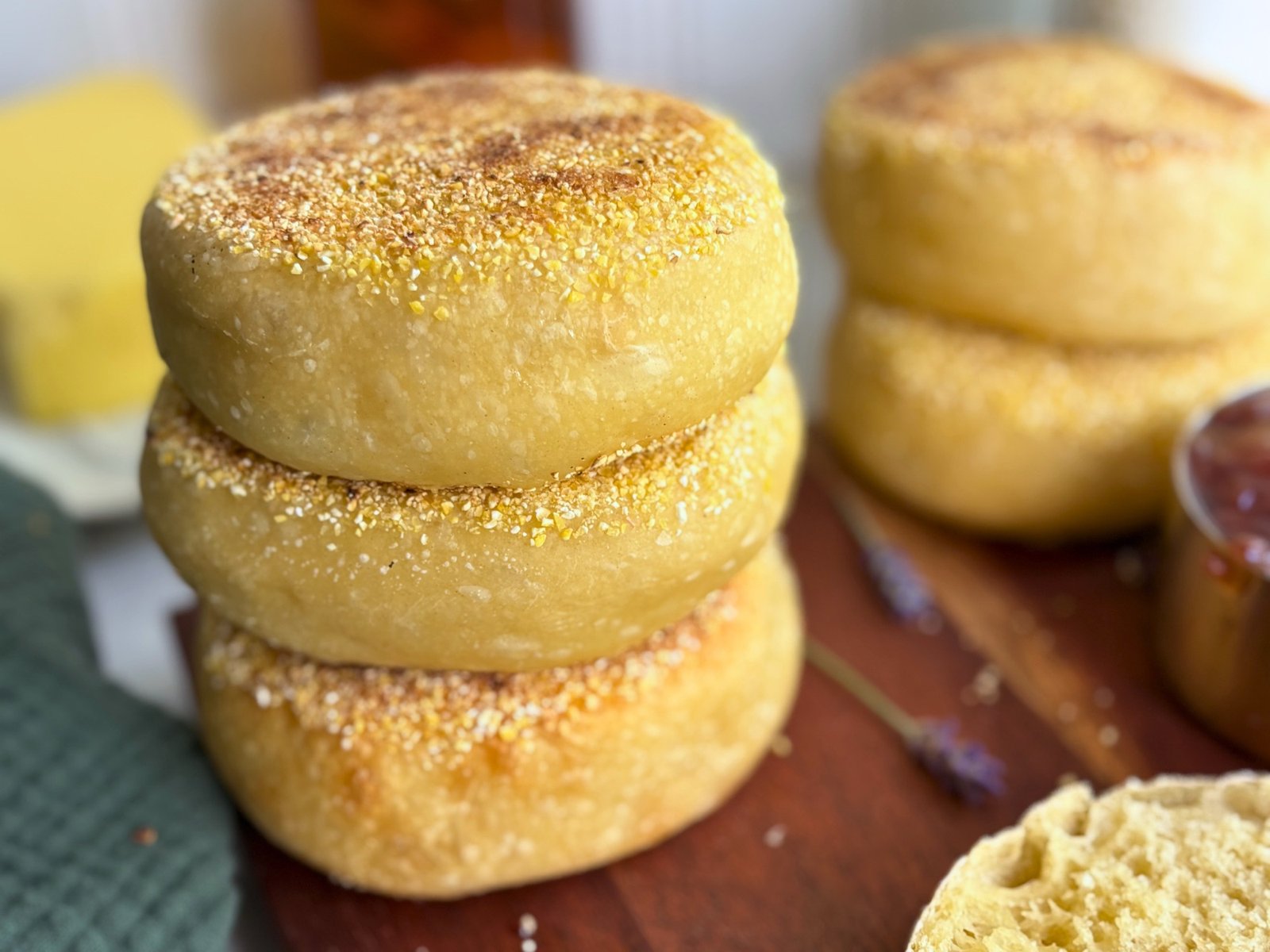
Welcome to the wonderful world of homemade sourdough English muffins where every single bite brings a burst of rustic joy and wholesome comfort straight from your very own kitchen to your breakfast table. If you have ever wanted to bake something truly special using your wild yeast starter instead of store bought packets then this recipe is going to change your mornings forever and fill your home with the most incredible aroma. We are going to dive deep into the magic of long fermentation which creates those famous nooks and crannies that hold onto pools of melted butter and sweet jam better than anything else you can possibly buy at the local grocery store. Making bread products at home might feel a little intimidating when you are just starting out on your baking journey but I promise you that this process is wonderfully forgiving and deeply rewarding for bakers of every single skill level. By the end of this guide you will feel completely confident mixing, shaping, and cooking your very own batch of golden breakfast treats that will make you wonder why you waited so long to try making them yourself.
People absolutely fall in love with these homemade sourdough English muffins because they offer an incredible depth of flavor that commercial yeast breads simply cannot match no matter how hard they try to copy it. The secret lies in the wild starter which gives the dough a gentle and pleasant tanginess that balances out the rich creaminess of butter and the sweet comfort of honey or maple syrup spread generously across the top. Beyond the amazing taste everyone adores the signature texture featuring hundreds of airy pockets and crispy edges created when you split the muffin open with a fork rather than slicing it with a knife. Eating a warm muffin fresh off the griddle with steam rising into the air is an experience that instantly connects you to generations of home cooks who relied on simple flour, water, and patience to nourish their families. It is a sensory delight that turns a standard Tuesday morning breakfast into a luxurious weekend brunch experience without requiring you to spend a fortune at a fancy cafe downtown.
You should make these delightful sourdough English muffins whenever you want to slow down and enjoy the therapeutic rhythm of working with living dough on a quiet afternoon or a cozy Sunday morning. Maybe you have a jar of bubbly sourdough starter sitting in your refrigerator from baking crusty artisan loaves and you are looking for a fantastic way to use the discard or an active fed portion in a brand new way. From a taste perspective nothing compares to the crispy cornmeal crust and the soft chewy interior that melts in your mouth with every single bite you take with your morning coffee. From a wellness point of view, using a long fermented sourdough process breaks down complex starches and gluten proteins much easier for your digestive system compared to standard quick breads made with commercial yeast. It is a wonderful fitness and health choice because you control every single ingredient that goes into the mixing bowl without any artificial preservatives, strange gums, or hidden chemical additives sneaking into your morning meal.
Baking these gorgeous breakfast treats is also a fantastic project to share with your family, children, or friends who want to learn the ancient art of bread making in a fun and approachable environment where mistakes are just tasty learning curves. You do not need any fancy professional kitchen equipment to get started because a simple glass mixing bowl, a wooden spoon, a rolling pin, and a standard heavy bottom skillet or cast iron pan are more than enough. The entire journey from mixing the shaggy dough to watching the little rounds puff up on the hot griddle is full of magical little moments that remind you how joyful cooking from scratch can truly be for your soul. So tie your favorite kitchen apron around your waist, clear off your countertop, and get ready to create the most delicious homemade breakfast bread your kitchen has ever seen from start to finish.
Ingredients You Will Need
To bake this wonderful batch of homemade sourdough English muffins, you will need to gather a few simple kitchen staples that you likely already have sitting in your pantry and refrigerator right now. Here is the complete list of everything required to make these delicious treats successfully:
-
Active bubbly sourdough starter: One cup fed and active within the last four to six hours to ensure the dough rises nicely.
-
Warm water: Three quarters of a cup to help hydrate the flour and wake up the friendly wild yeast cultures.
-
All purpose flour: Three and a half cups plus a little extra for dusting your hands and your wooden workspace.
-
Granulated white sugar: One tablespoon to feed the yeast and add just a tiny hint of background sweetness.
-
Salt: One and a half teaspoons to enhance all the natural flavors and strengthen the structure of the dough.
-
Melted unsalted butter: Two tablespoons cooled slightly so it does not shock your live sourdough starter culture.
-
Yellow cornmeal: One half cup sprinkled generously on your baking sheets and skillet to prevent sticking and add a classic bakery crunch.
Step by Step Method
Making these sourdough English muffins is a wonderful adventure that takes a little bit of time and patience, but the actual hands on work is very simple and easy to follow even if you have never baked yeast bread before in your life. Just take a deep breath, follow these detailed steps carefully, and you will have a batch of gorgeous golden muffins ready to enjoy in no time.
First, you need to prepare your mixing bowl by combining the bubbly active sourdough starter, warm water, and granulated white sugar together using a sturdy wooden spoon until the mixture looks smooth and milky. Next, add three cups of your all purpose flour along with the salt directly into the liquid mixture, stirring vigorously until a sticky and shaggy dough begins to form without any dry patches of flour remaining at the bottom of the bowl. Pour the slightly cooled melted butter over the top of your shaggy dough ball and use your clean hands to knead it right inside the bowl for about two minutes until the butter is fully absorbed. Turn the soft dough out onto a clean, lightly floured kitchen counter and knead it firmly for another eight to ten minutes until the surface feels smooth, elastic, and slightly bouncy to the touch. Place your kneaded dough ball into a clean, lightly oiled glass bowl, cover it tightly with a damp cotton kitchen towel or plastic wrap, and let it rest in a warm spot in your kitchen for about four to six hours until it doubles nicely in size.
Once your dough has risen nicely and looks nice and puffy, gently punch it down to release the trapped gases and turn it out onto a clean workspace that has been dusted with a generous layer of flour. Use a rolling pin to roll your dough out evenly until it reaches a thickness of about three quarters of an inch, making sure not to roll it too thin because you want those tall fluffy muffins. Take a round biscuit cutter or a clean drinking glass measuring about three inches across and press straight down into the rolled dough without twisting to cut out as many neat round circles as you possibly can. Gather up all the leftover dough scraps, gently press them back together into a ball, roll it out once more, and cut out the remaining rounds until no dough is left behind on your counter. Sprinkle a baking sheet heavily with yellow cornmeal and place your freshly cut dough rounds on top, then sprinkle more cornmeal over the tops and cover them loosely with a clean cloth to let them rise a second time for about one to two hours until they look puffy and light.
Now comes the most exciting part of the entire process where you actually cook your muffins on top of the stove rather than baking them inside a traditional hot oven. Heat a heavy cast iron skillet or a thick bottom frying pan over medium low heat for several minutes to ensure the heat is evenly distributed across the entire cooking surface without getting so hot that the outside burns before the inside cooks through. Carefully transfer a few of the cornmeal coated dough rounds into your dry, ungreased skillet, leaving a little bit of space between each one so you can easily flip them over later on. Cook the muffins slowly for about six to eight minutes on the first side until the bottom develops a gorgeous golden brown crust, then gently flip them over and cook for another six to eight minutes on the second side until both sides are deeply toasted and the internal temperature reaches perfection. Repeat this careful griddle cooking process with the rest of your dough rounds, making sure to adjust your stove burner temperature down if the skillet gets too hot during the cooking session. Once your delicious sourdough English muffins are completely cooked through, transfer them to a wire cooling rack and let them cool down fully before you attempt to open them up.
Why This Recipe Is Special
This particular recipe stands out from ordinary quick breads because it honors the ancient tradition of slow fermentation which transforms simple pantry ingredients into something extraordinary for your body and your taste buds. The wild yeast and beneficial bacteria working inside your sourdough starter break down the starches and proteins during the long rising hours, making the final baked muffin much easier for your stomach to digest without any heavy bloating or discomfort. Taste wise, you get a wonderful balance of rustic sourdough tang combined with the rich buttery flavor of the crumb and the delightful crunch of toasted cornmeal on the outer crust. Furthermore, baking these muffins at home fills your entire house with a comforting, nostalgic aroma that instantly makes any ordinary morning feel like a special holiday celebration with your favorite people gathered around the kitchen island.
Extra Tips for Better Taste
To take your homemade sourdough English muffins from simply wonderful to absolute perfection, keep these creative improvement tips in mind every single time you bake a batch in your kitchen. Always make sure your sourdough starter is at its absolute peak activity level before you mix your dough, because a sluggish starter will result in dense muffins that fail to rise properly on your griddle. If you love a sharper, more pronounced tangy flavor profile, you can let your shaped dough rounds undergo a cold fermentation process inside your refrigerator overnight before cooking them the next morning. When it is time to open your cooled muffins, never use a kitchen knife to slice straight through the middle, because doing so destroys all the precious internal pockets; instead, use the tines of a sturdy fork to poke holes all the way around the equator of the muffin and pull the two halves apart gently to reveal the famous nooks and crannies.
Final Thoughts
Baking bread from scratch is one of the most grounding and rewarding hobbies you can invite into your daily life, and these homemade sourdough English muffins are truly the shining star of breakfast recipes. There is a profound sense of pride that comes from watching a simple jar of flour and water turn into a batch of golden, bubbly, delicious treats that nourish the people you care about most in this world. We hope this guide inspires you to fire up your skillet, embrace the joyful mess of flour on your counter, and enjoy every single warm and comforting bite of your homemade creation. May your mornings always be filled with good food, warm coffee, and the quiet happiness that comes from creating something wonderful with your own two hands.
Nutrition Details
Here is a detailed breakdown of the nutritional profile for these homemade sourdough English muffins, calculated per single serving to help you keep track of your daily dietary goals and energy intake.
| Nutrient Category | Amount Per Serving | Daily Value Percentage |
| Calories | 165 kcal | 8 percent |
| Total Fat | 3.5 grams | 5 percent |
| Saturated Fat | 2.0 grams | 10 percent |
| Sodium | 280 milligrams | 12 percent |
| Total Carbohydrates | 30.0 grams | 11 percent |
| Dietary Fiber | 1.5 grams | 6 percent |
| Sugars | 1.0 grams | Not Applicable |
| Protein | 5.0 grams | 10 percent |
Disclaimer
Please remember that every single human body is completely unique, and nutritional needs, digestion speeds, and health responses can vary widely from one person to another depending on personal lifestyle and medical history. The nutritional information provided in this article is simply an estimated guide calculated using standard ingredient databases and should not be taken as professional medical or dietary advice. If you have specific food allergies, severe dietary restrictions, or underlying health conditions, it is always wise to consult with a qualified healthcare professional or registered dietitian before making significant changes to your daily meal plan.