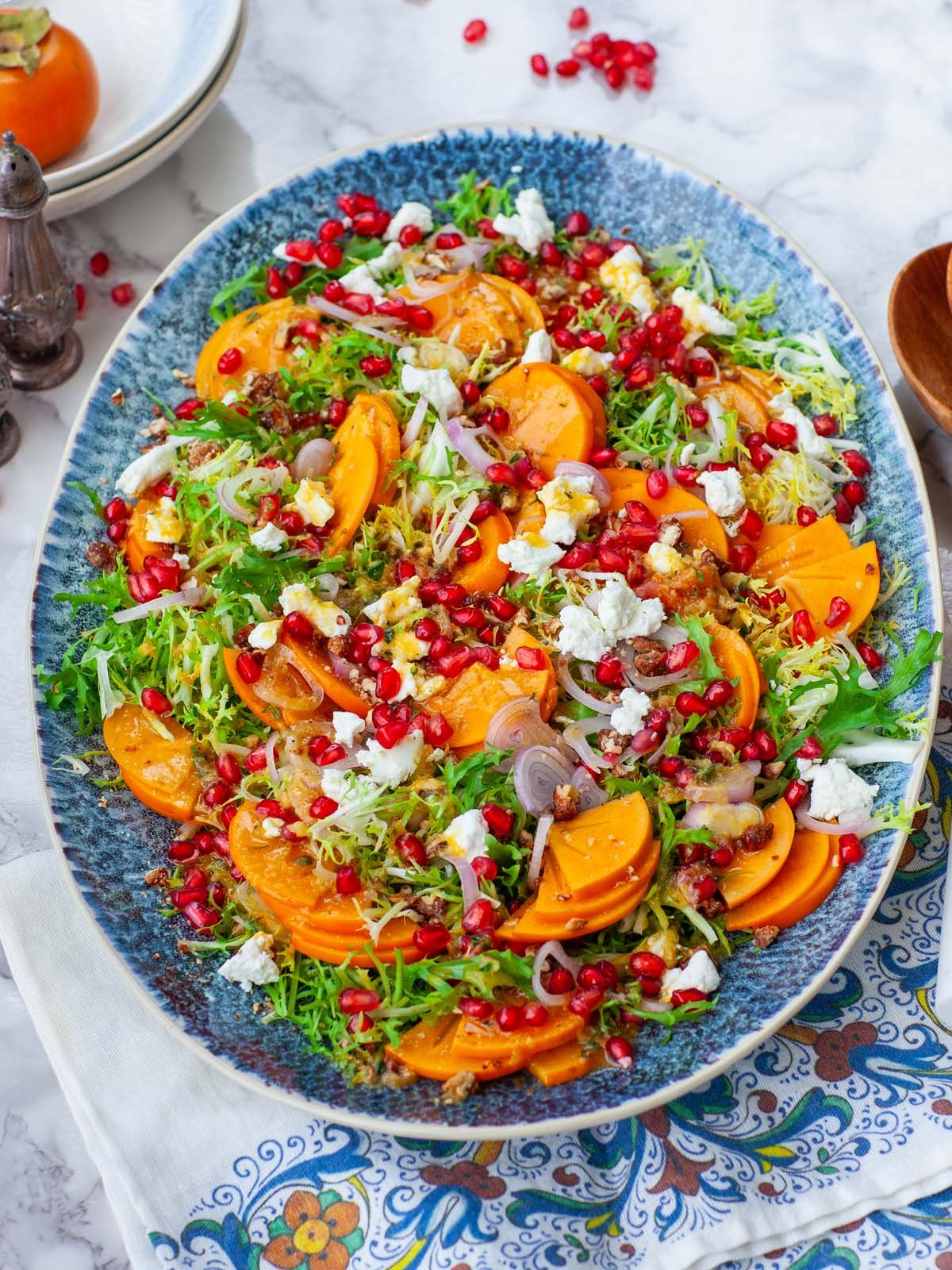
Welcome to a fresh, colorful bowl of joy that brings together the sunny warmth of the Mediterranean coast and the cozy sweetness of autumn and winter fruit. A Mediterranean Persimmon Pomegranate Salad is all about pairing crisp greens, sweet orange persimmon slices, jewel like pomegranate seeds, creamy cheese, crunchy nuts, and a bright lemon olive oil dressing. You do not need to turn on the stove or spend hours chopping complicated ingredients to make something that looks like it came straight from a sunny cafe table. Every bite gives you a little bit of sweet, tart, salty, nutty, and fresh all at once, which makes simple salad greens feel exciting again. When you look down at a bowl filled with deep red arils and glowing orange fruit over tender leaves, it feels like sunshine on a cool day.
People fall in love with this salad because it solves one of the biggest problems with everyday salads: feeling bored halfway through the bowl. Many basic salads rely on plain lettuce, watery tomatoes, and heavy creamy dressings that weigh you down instead of lifting you up. Here, ripe persimmons bring a honey like warmth and smooth crunch, while pomegranate seeds pop with bright, tangy juice that wakes up your taste buds. Add salty feta or crumbly goat cheese, toasted walnuts or pistachios, and sharp herbs like mint or parsley, and every forkful has its own story. It feels fancy enough for company, yet simple enough to toss together on a regular weekday evening when you want real food fast.
You might reach for this recipe when the weather turns crisp and you crave something bright that still feels grounded and filling. Emotionally, making a colorful salad with fresh fruit and good olive oil can feel like a small act of care after a busy, tiring day when takeout sounds tempting but heavy. Taste wise, it shines beside roasted chicken, baked salmon, warm pita bread, or lentil soup, cutting through rich flavors with clean citrus and tart fruit. Fitness and wellness minded home cooks love it too because it packs fiber, antioxidants, healthy fats, and plant goodness into a lively meal that keeps energy steady without leaving you sluggish.
Whether you are cooking for friends on a weekend afternoon or packing a refreshing lunch for yourself, this salad meets you right where you are. Beginners love it because there is no tricky cooking skill required, just simple slicing, tossing, and tasting as you go. Experienced home cooks love it because it leaves plenty of room to play with herbs, nuts, cheese, and citrus based on what looks freshest at the market. Once you taste how sweet persimmon, tart pomegranate, and peppery greens dance together with good olive oil and lemon juice, you may find yourself making it on repeat all season long.
Ingredients You Will Need
Gathering your ingredients before you start makes the whole process calm, fast, and enjoyable. These measurements make about four generous side servings or two hearty main lunch bowls.
For the Salad Base and Toppings
-
4 cups mixed baby greens, arugula, or romaine lettuce, washed and patted dry
-
2 medium Fuyu persimmons, firm yet ripe, stemmed and sliced into thin rounds or wedges
-
1 cup fresh pomegranate seeds (arils), about one medium pomegranate
-
1/2 cup crumbled feta cheese (or mild goat cheese)
-
1/3 cup raw or toasted walnut halves (or shelled pistachios), roughly chopped
-
1/4 cup thin red onion slices (soaked in cold water for 10 minutes to mellow the sharpness)
-
1/4 cup fresh flat leaf parsley leaves, roughly chopped
-
2 tablespoons fresh mint leaves, torn or finely sliced
For the Mediterranean Lemon Olive Oil Dressing
-
3 tablespoons extra virgin olive oil
-
2 tablespoons fresh lemon juice (about half to one juicy lemon)
-
1 teaspoon honey or pure maple syrup (optional, adjusts sweetness)
-
1/2 teaspoon Dijon mustard (helps the oil and lemon blend smoothly)
-
1/4 teaspoon fine sea salt, plus more to taste
-
1/4 teaspoon freshly cracked black pepper
-
1/4 teaspoon dried oregano (rubbed between your fingers to release aroma)
Step by Step Method
Cooking should feel relaxed and clear, especially if you are still building confidence in the kitchen. Follow these steps slowly, taste as you go, and enjoy turning fresh produce into a vibrant meal.
Step 1: Prep the Red Onion and Herbs
Start by slicing the red onion as thinly as you can with a sharp knife. Raw red onion can sometimes taste too sharp or spicy, so placing the thin slices in a small bowl of cold water for about ten minutes softens that bite while keeping a pleasant crunch. While the onion sits, wash and dry your greens thoroughly using a salad spinner or clean kitchen towel so water does not dilute your dressing. Chop the parsley and tear the mint leaves so they are ready to scatter in later.
Step 2: Prepare the Pomegranate Seeds
Pomegranate seeds can splatter juice if you rush, so take your time and work over a bowl or cutting board. Cut the pomegranate in half around the middle, hold one half cut side down over a mixing bowl, and tap the back of the rind firmly with a wooden spoon. Many bright red seeds will drop right out into the bowl. Open up the remaining seeds with your fingers, pulling away the pale white pith because that bitter white part can change the flavor of the salad.
Step 3: Slice the Persimmons Properly
Choose Fuyu persimmons rather than pointy Hachiya ones for this salad. Fuyu persimmons look a bit like squat tomatoes and stay firm enough to slice cleanly without turning mushy. Rinse the fruit, slice off the leafy green top, and cut the persimmon into thin half moons or bite sized wedges. If you notice any tough bits near the core, trim them away so every slice is tender and easy to eat.
Step 4: Toast the Nuts for Extra Crunch
Place your chopped walnuts or pistachios in a dry skillet over medium low heat. Stir or toss them often for three to five minutes until they smell warm and toasty and look slightly deeper in color. Watch closely because nuts can go from golden to burnt in just seconds. Transfer them onto a cool plate right away so they stop cooking and stay crisp.
Step 5: Whisk Up the Dressing
In a small bowl or a clean glass jar with a lid, add the fresh lemon juice, Dijon mustard, honey or maple syrup, sea salt, black pepper, and dried oregano. Whisk with a fork or shake the jar well so the salt dissolves into the lemon juice. Slowly drizzle in the extra virgin olive oil while whisking continuously until the dressing looks glossy and lightly thickened. Dip a clean spoon in and taste it: you want a lively balance of bright lemon, savory olive oil, and just a whisper of sweetness.
Step 6: Drain the Onion and Toss the Base
Drain the red onion slices from their cold water bath and pat them dry. In a wide salad bowl, add the dried greens, red onion, chopped parsley, and torn mint. Drizzle about half of the dressing over the greens and toss gently from the bottom up so the leaves are lightly coated without becoming soggy.
Step 7: Arrange the Persimmons, Pomegranate, Cheese, and Nuts
Spread the dressed greens out on a large serving platter or wide bowl so you can see all the colors. Arrange the persimmon slices evenly across the top, then scatter the pomegranate seeds over everything like little rubies. Sprinkle on the crumbled feta cheese and toasted nuts, then drizzle the remaining dressing lightly over the fruit and cheese. Serve right away while the greens are crisp and the nuts still have their warm crunch.
Why This Recipe Is Special
Many salads feel like a chore to eat, yet this combination brings real excitement to the table. Sweet persimmons bridge the gap between fruit and savory food, giving you a mellow, cozy flavor that pairs naturally with salty cheese and tangy citrus. Pomegranate arils add tiny bursts of tart juice and crunch, turning every bite into a contrast of textures rather than one flat note.
From a nutrition standpoint, this salad shines because it brings together colorful plant foods in one bowl. Leafy greens provide vitamins, minerals, and gentle bulk that help you feel satisfied. Persimmons and pomegranates supply dietary fiber along with natural plant compounds like carotenoids and polyphenols, which support everyday wellness and help protect cells from normal daily wear and tear.
Healthy fats are another big reason this dish feels so nourishing. Extra virgin olive oil, walnuts or pistachios, and cheese supply fats that help your body absorb fat soluble nutrients like vitamin A precursors from the orange fruit and greens. Those healthy fats and fibers also slow down digestion a bit, helping you stay full longer than you might expect from a fruit and veggie packed bowl.
Best of all, it fits real life without demanding fancy gear or complicated cooking. You get the bright, sunny spirit of Mediterranean eating using ingredients that feel welcoming and familiar. Whether you serve it as a colorful side dish at a family dinner or eat a big bowl for lunch at your desk, it tastes fresh, lively, and memorable.
Extra Tips for Better Taste
Once you make the base recipe once or twice, small tweaks can help you tailor it to your exact mood and pantry. Here are simple ways to make each bowl even better:
-
Swap the cheese for a new vibe: Crumbled feta brings briny Mediterranean character, while soft goat cheese adds tang and creaminess, and shaved parmesan or pecorino gives a salty, nutty finish.
-
Play with citrus and vinegar: Try blood orange juice or Meyer lemon in the winter months, or swap half the lemon juice for white balsamic or apple cider vinegar for a softer tang.
-
Add warm grains or protein: Stir in cooked quinoa, farro, chickpeas, or sliced grilled chicken if you want a bigger, heartier meal that holds you for hours.
-
Dress right before serving: Tender greens and juicy pomegranate seeds taste best when dressed just before you eat, so keep leftover dressing in a separate jar if you plan to pack lunch later.
-
Add avocado for extra creaminess: Sliced ripe avocado tucks right in alongside the persimmons and makes the texture even richer.
-
Toast spices into the nuts: Toss a tiny pinch of cinnamon, smoked paprika, or cumin onto the nuts during the last thirty seconds of toasting for a warm surprise.
Final Thoughts
Food does not have to be complicated to feel special, and a bowl of crisp greens, sweet persimmons, bright pomegranate seeds, and golden olive oil proves that every single time. Cooking at home is really about paying attention to color, texture, and flavor, and giving yourself a few quiet minutes to put together something nourishing. Whether you make this salad to brighten up a gray afternoon, share with people you love, or enjoy a fresh reset after heavy meals, I hope it brings a little extra warmth and color to your kitchen.
Nutrition Details
Nutrition values are estimates based on standard ingredients for four servings using 3 tablespoons olive oil, 1/2 cup feta, and 1/3 cup walnuts. Exact numbers will vary depending on brand sizes, ripeness of fruit, and how much dressing or cheese you use.
| Nutrient | Estimated Per Serving | Estimated Whole Recipe (4 Servings) | Notes and Role in the Dish |
| Calories | 295 kcal | 1,180 kcal | Moderate energy from fruit, nuts, cheese, and olive oil |
| Total Fat | 21 g | 84 g | Mostly unsaturated fats from olive oil and nuts plus dairy fat |
| Saturated Fat | 4.5 g | 18 g | Comes mainly from feta cheese and small amounts in olive oil and nuts |
| Carbohydrates | 22 g | 88 g | Natural sugars and complex carbs from persimmons, pomegranate, and greens |
| Dietary Fiber | 6 g | 24 g | Supports digestion and steady fullness |
| Total Sugars | 14 g | 56 g | Mostly natural fruit sugars; honey is optional |
| Protein | 6 g | 24 g | From feta, walnuts, and greens; easy to boost with beans or chicken |
| Sodium | 260 mg | 1,040 mg | Comes mainly from feta cheese and added table salt |
| Potassium | 520 mg | 2,080 mg | Naturally abundant in persimmons, pomegranate, and leafy greens |
| Vitamin C | 22 mg | 88 mg | Supports normal immune function and collagen formation |
Disclaimer
This article is for general information and everyday cooking inspiration only and is not medical, nutritional, or professional healthcare advice. Every person has a unique body, health history, digestion pattern, and food tolerance, so nutritional needs and individual responses to foods or ingredients can vary from person to person. If you have allergies, food sensitivities, diabetes, kidney concerns, medication interactions, or specific health goals, check with a qualified doctor or registered dietitian before making major changes to your diet.