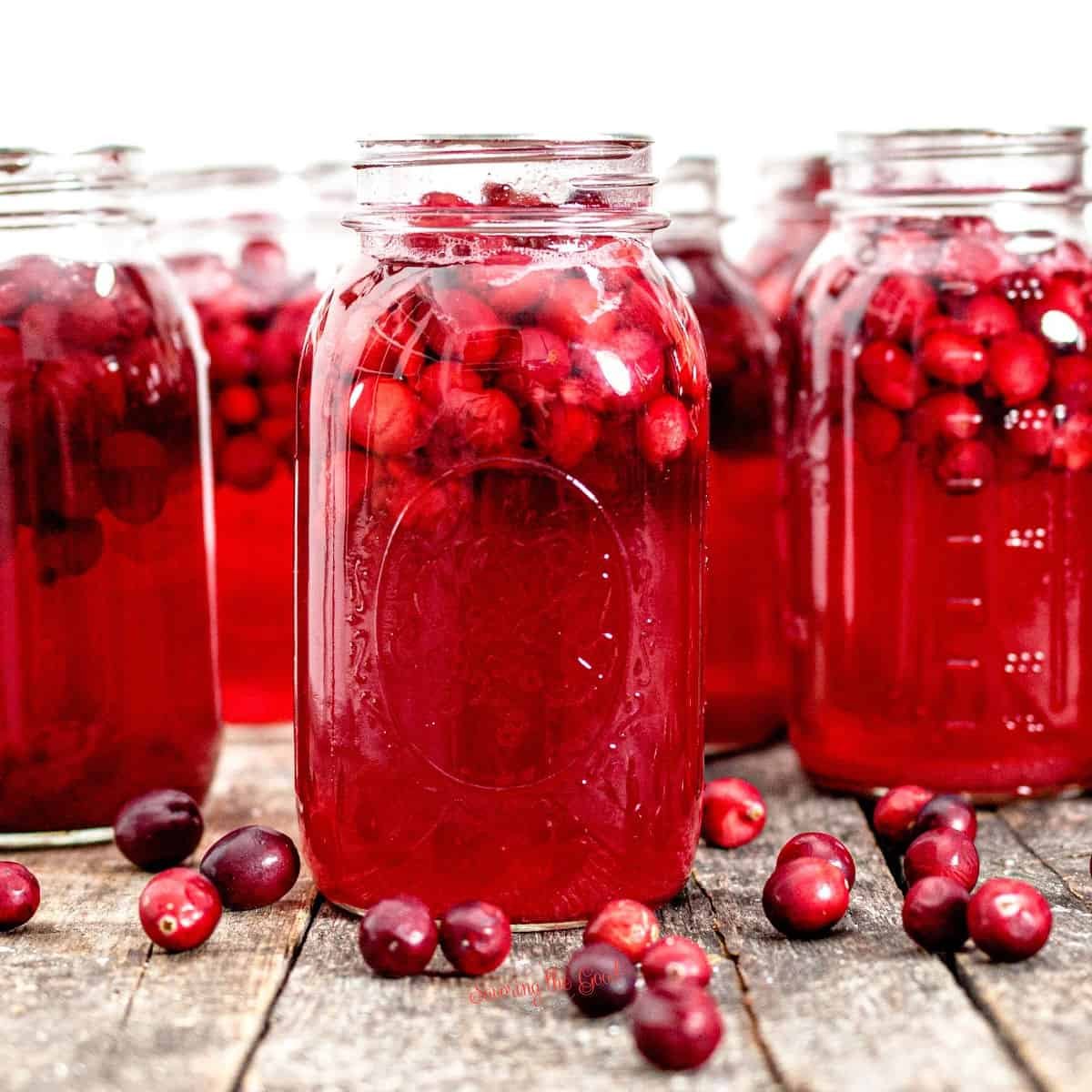
This homemade canned cranberry juice recipe shows you how to turn fresh, tart red berries into rich ruby juice sealed safely inside glass jars for long term pantry storage. Many store bought cranberry drinks are heavily watered down, loaded with corn syrup, or mixed with apple and grape juice so they taste sweet instead of bold and clean. When you cook fresh cranberries in water, strain out the pulp and skins, sweeten gently to your own liking, and process the jars in a boiling water bath canner, you get pure flavor you can trust. Even if you have never canned a single jar before, the steps are calm, clear, and easy to follow in a regular home kitchen. You only need basic pots, clean jars, fresh berries, water, and a little patience while the berries pop and release their deep red color. Watching those little berries burst on the stove and turn clear water into glowing crimson liquid feels like kitchen magic every single time.
People love this recipe because it brings bright, lively flavor to everyday routines without artificial dyes or mystery ingredients. Store bottles often sit on shelves for months and carry a flat sweetness that leaves your mouth feeling coated rather than refreshed. Homemade cranberry juice has a crisp tang and a clean finish that wakes up your taste buds in the morning or cools you down after a long day outdoors. Home cooks also adore lining up sparkling ruby jars on a pantry shelf because canning gives a real sense of accomplishment and self reliance. You control how sweet or tart each batch turns out, whether you prefer a gentle honey touch, a classic cane sugar balance, or an unsweetened concentrate you dilute later. Sharing a jar with a neighbor, bringing a bottle to a family dinner, or pouring a cold glass over ice feels personal and thoughtful in a way store cartons never match.
You can make this recipe whenever fresh cranberries hit grocery stores and farm stands in autumn and early winter, or whenever you want a comforting project on a quiet weekend. Emotionally, there is something deeply grounding about standing over a warm stove, smelling tart berries simmer, and hearing the soft pop of jar lids sealing tight as the kitchen cools. Taste wise, it shines in winter mocktails, holiday punches, spritzers with sparkling water, warm spiced drinks on chilly evenings, or straight from the fridge on a bright morning. From a fitness and wellness angle, many active people enjoy keeping tart cranberry juice on hand as a refreshing hydration option after workouts or during busy weeks when they want a zesty drink without soda or heavy energy beverages. Having jars ready in your cupboard means you always have a bright, homemade drink waiting whenever a craving, celebration, or wellness routine calls for it.
Ingredients You Will Need
Before you turn on the stove, gather your ingredients and measure them carefully so everything flows smoothly from start to finish. Fresh, firm cranberries give the clearest color and strongest flavor, while filtered or good tasting tap water helps the pure berry character shine through.
-
Fresh cranberries: 8 cups (about 2 pounds or 900 grams), rinsed and picked over to remove any soft spots or stems
-
Water for simmering: 8 cups (64 fluid ounces or 1.9 liters), filtered or clean tap water
-
Granulated white sugar or organic cane sugar: 1 to 1.5 cups (200 to 300 grams), adjusted to taste depending on how tart or sweet you like your juice
-
Pure lemon juice: 2 tablespoons (30 milliliters), optional for extra brightness and balanced acidity (note that canned cranberry juice is naturally acidic, though fresh lemon adds a crisp lift)
-
Canning salt: A tiny pinch (about 1/8 teaspoon, optional), used by some home canners to subtly round out sharp fruit flavors without making the drink taste salty
You will also need standard home canning supplies ready before you begin:
-
Glass canning jars: 6 to 7 pint jars (16 fluid ounces each) or 3 to 4 quart jars (32 fluid ounces each), washed hot and inspected for nicks or cracks
-
Two piece canning lids and screw bands: New flat sealing lids with fresh sealing compound, plus matching bands
-
Large pot or boiling water bath canner: Deep enough to cover upright jars by at least 1 to 2 inches of boiling water with a rack on the bottom
-
Large stockpot: At least 6 to 8 quarts capacity for boiling cranberries and water
-
Fine mesh strainer or jelly bag: Plus cheesecloth or a clean lint free dish towel if you want extra clear juice
-
Jar lifter, wide mouth funnel, and bubble remover or non metallic spatula: Helpful tools that make handling hot jars safe and tidy
Step by Step Method
Take your time with each step below. Canning rewards calm organization, clean hands, and steady heat. Read through the whole method once before you start so you know what comes next.
Step 1: Set Up Your Workspace and Wash Your Jars
Clear off a wide counter space away from drafts and pets so you have room for hot pots, a strainer, and cooling jars. Wash your glass jars, lids, and bands in hot soapy water and rinse them well. Keep the jars warm in a sink of hot water or in a warm oven set around 200 degrees Fahrenheit (about 93 degrees Celsius) so glass does not shock and crack when hot juice is poured inside. Set your new lids in warm water as directed by the lid maker so the sealing ring stays soft and ready.
Step 2: Prepare the Boiling Water Bath Canner
Place the rack inside your water bath canner or deep stockpot and set the jars on it so you can see how much water they need. Remove the jars, then fill the pot enough that water will cover the tops of filled jars by 1 to 2 inches. Turn the heat to medium high so the water begins warming up while you cook the berries. Heating the water early saves waiting time later.
Step 3: Sort, Rinse, and Simmer the Cranberries
Pour the fresh cranberries into a colander and rinse them under cool running water. Gently roll them with your fingers and toss out any bruised berries, shriveled pieces, or stray stems. Transfer the clean berries into your large stockpot and pour in the 8 cups of water. Turn the heat to high until the water comes to a lively boil, then lower the heat to a steady simmer.
Let the berries simmer uncovered for about 15 to 20 minutes, stirring occasionally with a wooden spoon or silicone spatula. As the heat builds, you will hear little popping sounds as the skins split open. Gently press a few berries against the side of the pot with the back of your spoon to help release their crimson juice. The mixture will look bright red, foamy at the edges, and full of floating skins and seeds.
Step 4: Strain Out the Solids for Smooth Juice
Set a large bowl or second pot on the counter and place a fine mesh strainer lined with cheesecloth or a clean, thin kitchen towel over the top. Carefully ladle or pour the hot cranberry mixture into the strainer. Let it drain on its own for several minutes so the liquid runs clear and ruby red.
Once most of the free liquid has drained through, gather the edges of the cheesecloth or towel together, twist gently above the bowl, and press lightly to extract more juice. Avoid squeezing too hard if you want crystal clear juice, since heavy squeezing pushes tiny bits of pulp through. If you do not mind a little natural body, a gentle press gives extra yield and rich color. Discard the spent skins and seeds in your compost bin or trash.
Step 5: Sweeten and Simmer the Strained Juice
Pour the strained cranberry juice back into your cleaned stockpot. Stir in your chosen amount of sugar (start with 1 cup if you like a lively tart drink, or use 1.5 cups for a softer, sweeter juice) along with the lemon juice and pinch of salt if using. Warm the juice over medium heat, stirring often until every grain of sugar dissolves completely.
Bring the sweetened juice to a gentle boil and let it bubble softly for about 5 minutes. Skim off any light foam on top with a clean spoon so your canned juice looks neat and appetizing in the jars. Taste a tiny spoonful after cooling it on a plate for a moment, keeping in mind that flavors settle slightly once stored.
Step 6: Fill the Jars Leaving Proper Headspace
Take one hot jar at a time from your warm water or oven and set it on a folded towel. Place a canning funnel over the jar opening. Ladle the hot cranberry juice into the jar, leaving 1/2 inch of headspace at the top. Headspace is the open air space between the top of the liquid and the bottom of the lid, and it gives the liquid room to expand and form a strong vacuum seal.
Slide a bubble remover tool or clean plastic knife gently around the inside of the jar to release trapped air bubbles, then add a tiny splash more hot juice if needed to restore the 1/2 inch headspace. Wipe the rim and threads of the jar with a clean, damp paper towel or cloth to remove any sticky drips or sugar. Even a tiny speck of sugar on the rim can keep a lid from sealing properly.
Step 7: Apply Lids and Process in Boiling Water
Center a sealing lid on the jar rim so the sealing compound touches the glass evenly. Screw a metal band onto the jar until it is fingertip tight. Do not crank it down with all your strength, because excess air needs a path to escape during processing while the jar is hot.
Using a jar lifter, lower each filled jar upright onto the rack inside your canner. Make sure the jars do not touch one another or crowd the sides tightly. Once all jars are in, add more boiling water if needed so the water sits at least 1 inch above the jar tops. Put the canner lid on, bring the water to a full rolling boil, and start your timer:
-
Processing time: 10 minutes for both pint and quart jars at altitudes up to 1,000 feet (about 300 meters) above sea level
If you live at a higher elevation, increase the boiling time according to standard home canning altitude charts (for example, 15 minutes from 1,001 to 6,000 feet, and 20 minutes above 6,000 feet). Keep the boil steady throughout the entire timing period, and only start counting once the water is actively boiling across the whole pot.
Step 8: Cool, Check Seals, and Store in the Pantry
When the timer rings, turn off the heat and remove the canner lid carefully, tilting it away from your face so steam escapes safely. Wait 5 minutes before lifting the jars out so they adjust gradually to room temperature. Lift each jar straight up with a jar lifter without tilting it, and set it onto a folded towel or wooden board away from cold drafts.
Leave the jars undisturbed for 12 to 24 hours. Do not push down on the center of the lids while they are cooling. After cooling, gently press the center of each lid; if it does not flex up and down, it has sealed well. You can also lightly tap the lid with a spoon or lift the jar slightly by the lid edge to confirm a solid seal. Remove the screw bands, wipe the outside of the jars with a damp cloth, label them with the date and contents, and store them in a cool, dark pantry for up to 12 to 18 months for best quality. Any jar that does not seal within 24 hours can be placed in the refrigerator and enjoyed first within a couple of weeks.
Why This Recipe Is Special
This homemade canned cranberry juice recipe stands out because it gives you total control over both purity and flavor. Many commercial cranberry beverages are made from concentrate blended with cheaper juices like apple or pear, plus added sweeteners and natural flavorings. When you make your own at home, you know every single ingredient inside every jar. There are no artificial colors, no preservatives, and no guessing games about what went into the pot.
From a taste standpoint, fresh cranberries have a bold, brisk personality that wakes up your palate. Cooking them with water draws out a vibrant ruby hue and a sharp, refreshing tang that feels lively and clean. Sweetening the juice yourself lets you tailor the balance to match your household. Some people love a tangy, brisk juice with just a light touch of sugar, while others prefer a smoother, sweeter glass that kids enjoy right away. You can even can a slightly tart batch and dilute it with water, club soda, or fresh citrus when you pour a glass later.
From a nutrition and wellness angle, cranberries are naturally rich in vitamin C, dietary compounds called polyphenols, and plant antioxidants known as proanthocyanidins. Many people include unsweetened or lightly sweetened cranberry juice as part of a balanced routine focused on staying well hydrated, supporting everyday wellness, and enjoying colorful whole plant foods. Because this recipe uses real fruit and water rather than heavy soda syrups, it offers an uplifting beverage choice when you want something flavorful without artificial ingredients. Plus, canning your own jars helps cut down on single use plastic bottles and store runs during busy months.
Extra Tips for Better Taste
Once you master the basic recipe, small tweaks can turn a simple batch of juice into a signature drink your family asks for year after year. Here are several creative ways to elevate flavor and texture:
-
Add warm whole spices during simmering: Toss 1 or 2 cinnamon sticks, 4 to 6 whole cloves, or a strip of fresh orange peel into the pot during the final 5 minutes of simmering (remove solids before canning). Spiced cranberry juice tastes wonderful warmed up in winter or poured over ice with a splash of ginger ale.
-
Make a two stage sweet and tart batch: If you like options, can half of your strained juice with less sugar for a bright, brisk juice, and sweeten the other half slightly more for a mellow, kid friendly drink.
-
Use pure honey or maple syrup after opening: If you prefer honey or pure maple syrup over granulated sugar, can your juice using standard sugar or even unsweetened, then stir honey or maple syrup into each chilled glass right before serving so delicate floral or woody notes stay vibrant.
-
Try a splash of fresh citrus at serving time: Keep the canned base pure, then squeeze fresh orange, lime, or tangerine juice into your glass when pouring. Fresh citrus oil adds fragrance and brightness that tastes freshly picked.
-
Turn it into a sparkling spritzer: Mix equal parts chilled homemade cranberry juice and cold sparkling water or club soda over ice for a crisp, bubbly afternoon refresher with zero carbonation loss from canning.
-
Freeze extra strained juice for quick recipes: If you end up with extra juice that does not quite fill another jar, pour it into ice cube trays or freezer safe containers to use in smoothies, salad dressings, marinades, or pan sauces for chicken and pork.
Final Thoughts
Making homemade canned cranberry juice is one of those kitchen projects that feels both practical and deeply satisfying. You start with a bowl of crisp red berries and simple water, and you end up with gleaming jars of ruby juice ready for busy mornings, cozy evenings, and family gatherings. Whether you are a brand new home canner testing your first water bath batch or an experienced cook looking for a clean, reliable pantry staple, this recipe brings bright flavor and homemade warmth right into your home.
Nutrition Details
Nutrition values vary depending on how much sugar you add, how tightly you strain the pulp, and whether you serve the juice straight or diluted with water or sparkling water. The table below gives an estimated breakdown for 1 cup (8 fluid ounces or 240 milliliters) of homemade canned cranberry juice made with 1 cup of granulated sugar across the batch (yielding roughly 7 cups / about 56 fluid ounces of finished juice), alongside comparisons with a lightly sweetened version, an unsweetened version, and a typical store bought cranberry juice cocktail.
Disclaimer
This article is shared for general culinary and informational purposes only and is not medical advice. Everyone’s body, health history, digestion, medication routine, and nutritional needs are different, so individual responses and results from eating or drinking cranberry products can vary. If you have specific health concerns, take prescription medications, are pregnant or nursing, or want personalized guidance on diet or wellness, talk with a qualified healthcare professional or registered dietitian. Always follow current, tested home food preservation guidelines for safe canning practices.