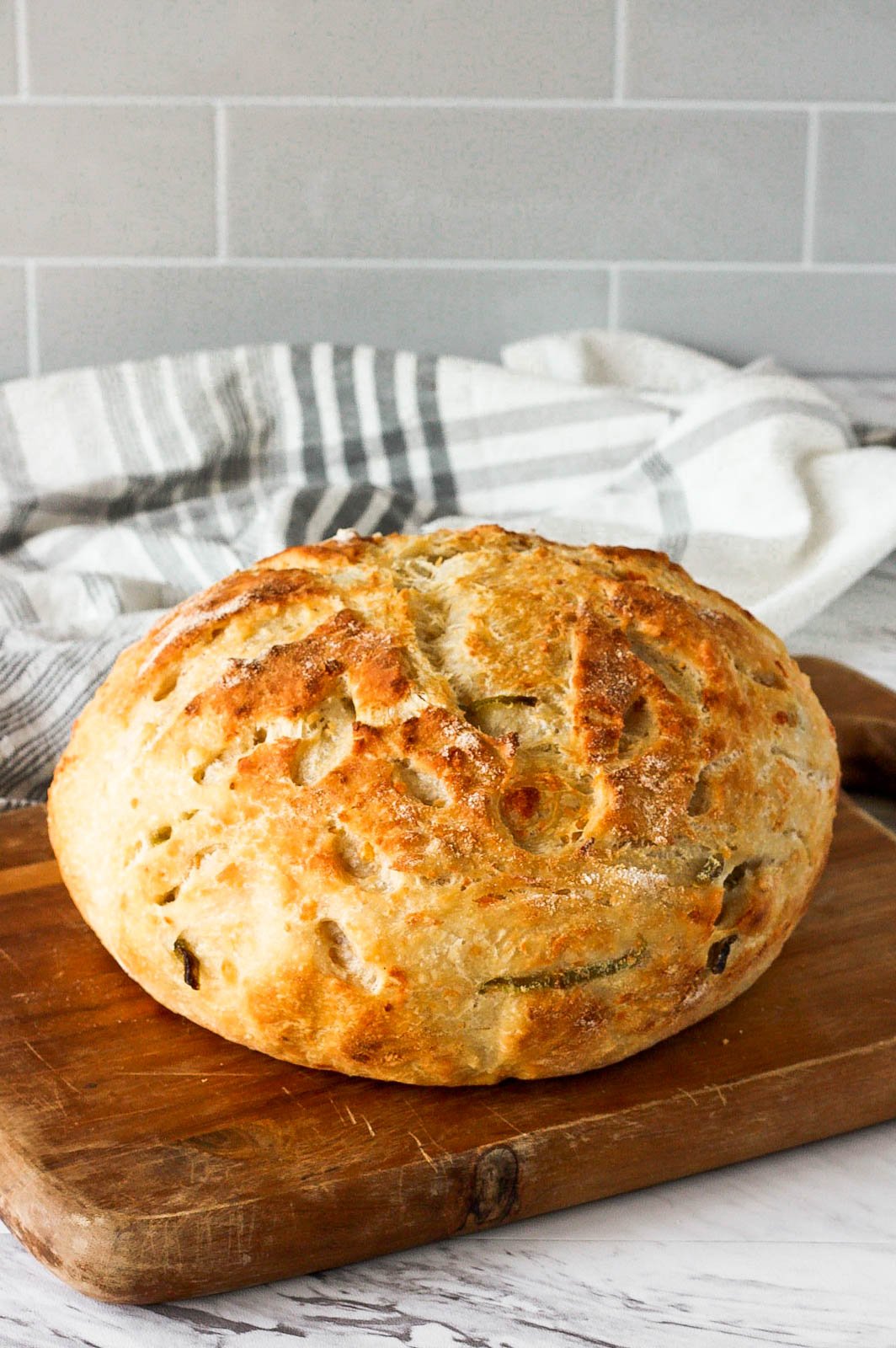
This recipe for Sourdough No Knead Rosemary and Cranberry Bread brings together the deep, gentle tang of wild fermentation with the bright, piney scent of fresh rosemary and the sweet tart pop of ruby cranberries. Instead of spending twenty minutes pushing and pulling heavy dough across your kitchen counter until your wrists ache, you let time and gentle resting do the heavy lifting for you. You stir simple ingredients together in a bowl, let natural sourdough starter work its slow magic, fold the dough softly a few times, and bake it inside a covered pot so steam creates a crisp, golden crust. Even if you have never baked a single loaf of bread in your life, this method removes the scary parts of sourdough baking and leaves you with a bakery worthy loaf right in your home oven. Every slice shows off tender pockets of air, bright bursts of cranberry, and tiny green flecks of rosemary that smell like a cozy morning in a country kitchen.
People fall in love with this bread because it tastes both comforting and special at the exact same time. Sourdough has a gentle sourness that wakes up your taste buds without ever feeling harsh, and dried cranberries bring a cheerful sweetness that balances that tang so nicely. Fresh rosemary adds an earthy, savory note that keeps the bread from tasting like a sweet cake, making it just right for breakfast with butter, lunch with soup, or dinner beside roasted vegetables and cheese. Home bakers especially adore no knead sourdough because it fits real life schedules rather than forcing you to stand by the stove all day. You can mix the dough in the evening or early in the morning, slip it into the fridge when you get busy, and bake a warm, fragrant loaf whenever you are ready to share something wonderful.
You might choose to make this sourdough no knead rosemary and cranberry bread on a quiet weekend when you want your house to smell warm, welcoming, and full of life. Sometimes people bake it for emotional comfort after a long week, because turning flour, water, salt, starter, herbs, and fruit into real bread feels grounding and calm. It is also a favorite choice for holiday gatherings, autumn dinners, and slow family brunches where a handmade loaf makes everyone feel cared for without needing fancy tools. From a wellness point of view, slow fermented sourdough with whole grain touches and real fruit can feel lighter and more satisfying than plain store bought white bread. Whether you bake it to lift your mood, treat your family, or enjoy a wholesome slice after an active morning walk, this loaf turns simple everyday ingredients into a moment worth slowing down for.
Baking bread at home does not have to be an intimidating science project that leaves you stressed out and covered in flour. With this gentle no knead approach, the dough rests patiently while natural wild yeast builds flavor, softens gluten, and creates that open, chewy crumb bakers dream about. As the loaf bakes, the outside turns deeply golden and crackly while the inside stays soft, springy, and fragrant with piney rosemary and sweet tart berries. You get the pride of pulling a steaming loaf out of the oven with your own two hands, plus the joy of slicing into it while the aroma fills every room. Once you taste a warm piece spread with softened butter or cream cheese, you will see why this combination earns a permanent spot in so many home kitchens.
Ingredients You Will Need
Gathering your ingredients ahead of time makes baking calm, smooth, and stress free. Measure carefully using a kitchen scale if you have one, or spoon and level measuring cups gently so you do not pack extra flour into the cup.
-
500 grams bread flour (about 4 cups, spooned and leveled)
-
100 grams active sourdough starter (about 1/2 cup, bubbly and at peak activity)
-
350 grams lukewarm water (about 1 and 1/2 cups, around 78°F to 82°F or 25°C to 28°C)
-
10 grams fine sea salt (about 1 and 3/4 teaspoons)
-
120 grams dried cranberries (about 3/4 cup)
-
15 grams fresh rosemary leaves (about 2 tablespoons, finely chopped)
-
15 grams extra olive oil or water (about 1 tablespoon, optional for hydrating cranberries or oiling the bowl)
-
10 grams rice flour or extra bread flour (about 1 tablespoon, for dusting the basket or parchment paper)
Step by Step Method
Follow these simple steps at your own pace. Sourdough runs on time and temperature rather than a strict stopwatch, so watch how the dough looks and feels as you go.
Step 1: Check Your Sourdough Starter
Make sure your sourdough starter was fed about 4 to 8 hours before you begin mixing the dough. It should look lively, airy, and full of bubbles, and it should roughly double in size since its last feeding. If you drop a tiny spoonful into a glass of room temperature water and it floats, your starter is usually ready to lift your bread nicely.
Step 2: Hydrate the Dried Cranberries
Place the 120 grams of dried cranberries in a small bowl and cover them with warm water for about 10 to 15 minutes, then drain them well and pat them dry with a clean towel. Plumping the berries keeps them juicy inside the finished loaf so they do not pull moisture out of the surrounding dough during baking. Finely chop the 15 grams of fresh rosemary leaves and strip away any tough woody stems so every bite has tender herb flavor.
Step 3: Mix the Dough Without Kneading
In a large mixing bowl, pour in the 350 grams of lukewarm water and add the 100 grams of active sourdough starter. Stir them together with your hand or a sturdy spoon until the water looks milky and the starter is mostly broken up. Add the 500 grams of bread flour and the 10 grams of fine sea salt, then mix everything together until no dry pockets of flour remain. The dough will look shaggy, sticky, and rough at first, which is completely normal for a no knead dough.
Step 4: Rest the Dough to Start Autolyse and Fermentation
Cover the mixing bowl with a damp kitchen towel, a shower cap, or a lid so the top of the dough does not dry out. Let the bowl rest on your counter at room temperature for 30 to 45 minutes. During this quiet rest, the flour absorbs water and natural fermentation begins without you needing to knead a single time.
Step 5: Perform Gentle Stretch and Folds
Instead of kneading on the counter, you will do 3 or 4 sets of gentle stretch and folds spaced about 30 minutes apart over the first 1.5 to 2 hours. Wet your hand slightly so dough does not stick, grab one edge of the dough inside the bowl, stretch it upward gently, and fold it over toward the center. Turn the bowl a quarter turn and repeat that stretch and fold about 6 to 8 times around the bowl until you have gone all the way around. Cover the bowl again and rest for 30 minutes between sets.
Step 6: Laminate and Fold In Rosemary and Cranberries
During your second or third stretch and fold round, scatter half of the chopped rosemary and half of the drained cranberries across the top of the dough. Fold the dough over the fruit and herbs, press lightly so they stay tucked inside, and add the remaining rosemary and cranberries on the next fold. Gently folding the add ins partway through the bulk ferment helps spread them evenly without tearing the dough apart.
Step 7: Complete Bulk Fermentation
After your final set of folds, cover the bowl and leave it at room temperature to finish bulk fermentation. Depending on your kitchen temperature, this takes about 4 to 7 hours in total from when you first mixed the starter and water. You are looking for the dough to grow by roughly 50% to 75%, show gentle bubbles near the surface or sides, and feel light and jiggly when you shake the bowl gently.
Step 8: Shape the Loaf Gently
Lightly flour your counter and tip the risen dough out onto it using a dough scraper or your hands. Gently shape it into a loose round or oval by folding the sides toward the center without squeezing out all the trapped air. Let the dough rest uncovered on the counter for 20 to 30 minutes so the gluten relaxes and becomes easier to tighten into a neat loaf.
Step 9: Final Shape and Cold Proof
Lightly tighten the dough into a round ball or oval batard by gently tucking the edges underneath while dragging it slightly across the counter to build surface tension. Dust a proofing basket or a bowl lined with a clean floured towel with rice flour or bread flour, then place the dough inside seam side up. Cover it and place it in the refrigerator for 8 to 16 hours for a cold proof, which deepens flavor and makes scoring much cleaner.
Step 10: Preheat and Bake Inside a Covered Pot
Place a Dutch oven or heavy lidded pot inside your oven and preheat both the pot and the oven to 450°F (230°C) for at least 30 to 45 minutes. Take the cold dough straight from the fridge, flip it gently onto a piece of parchment paper, and use a sharp knife or bread lame to make a clean slash about 1/4 to 1/2 inch deep across the top. Carefully lift the dough by the parchment paper into the hot pot, cover with the lid, and bake for 20 minutes.
Step 11: Uncover, Brown, and Cool Completely
Remove the lid carefully so hot steam escapes away from your face, then lower the oven temperature to 425°F (220°C) and bake uncovered for another 20 to 25 minutes. Look for a rich golden brown crust with a deep toasted rosemary aroma and a hollow sound when you tap the bottom of the loaf. Transfer the baked bread to a wire cooling rack and let it cool for at least 1 to 2 hours before slicing so the inside crumb sets cleanly instead of turning gummy.
Why This Recipe Is Special
This loaf stands out because it pairs classic sourdough character with bright, festive, and everyday flavors that complement each other naturally. Slow fermentation breaks down complex starches and proteins over hours, which many bakers and eaters find gentler on digestion than quick commercial yeast breads. Dried cranberries bring natural fruitiness and antioxidants, while rosemary contributes aromatic oils that make even a plain slice taste thoughtfully seasoned. Because there is no heavy kneading required, the crumb stays open, tender, and chewy without turning dense or overworked. It is also wonderfully versatile, working just as well for a quiet morning toast ritual as it does beside a warm bowl of soup on a chilly evening.
Extra Tips for Better Taste
Small tweaks can take a great homemade loaf and make it taste truly unforgettable for your household. Try these creative ideas once you feel comfortable with the base recipe:
-
Add orange zest: Grate the zest of one fresh orange into the dough with the rosemary to brighten the cranberries and bring out a warm citrus lift.
-
Toast walnuts or pecans: Fold in 60 grams (about 1/2 cup) of lightly toasted walnuts or pecans alongside the cranberries for extra crunch and nutty richness.
-
Finish with flaky sea salt: Sprinkle a pinch of coarse or flaky sea salt over the scored top just before putting the lid on to highlight the sweet berries and savory herbs.
-
Swap in fresh thyme or sage: If you want a slightly softer herb note, replace part of the rosemary with finely chopped fresh sage or thyme leaves.
-
Warm slices in a skillet: Toast day old slices in a dry pan or with a tiny dab of butter to bring back crisp edges and wake up the rosemary aroma.
Final Thoughts
Baking Sourdough No Knead Rosemary and Cranberry Bread is one of those simple kitchen habits that rewards your patience every single time. You do not need expensive gadgets, complicated schedules, or years of baking experience to pull a gorgeous, fragrant loaf from your oven. Take your time, trust your senses as the dough rises, and enjoy the quiet satisfaction of sharing warm bread made with care. Whenever you want a loaf that feels both comforting and a little bit special, this recipe is ready whenever you are.
Nutrition Details
Nutrition values below are estimated for the whole recipe (approximately 850 grams baked loaf weight) and for one slice assuming 12 equal slices per loaf. Actual numbers vary based on flour brand, cranberry sweetness, moisture loss during baking, and slice thickness.
| Nutrient | Whole Recipe (1 Loaf, ~12 Slices) | Per Serving (1 Slice, ~70g) | Other Notes / Comparisons |
| Calories | ~2,640 kcal | ~220 kcal | Comparable to a medium artisan fruit or herb bread slice |
| Carbohydrates | ~528 g | ~44 g | Mostly from bread flour and natural sugars in dried cranberries |
| Dietary Fiber | ~24 g | ~2 g | Increases if you substitute part of the bread flour with whole wheat flour |
| Total Sugars | ~60 g | ~5 g | Comes mainly from dried cranberries; unsweetened dried berries lower this |
| Protein | ~72 g | ~6 g | Comes primarily from bread flour and sourdough starter |
| Total Fat | ~18 g | ~1.5 g | Mostly from olive oil (if used), rosemary, and traces in flour and fruit |
| Saturated Fat | ~2.4 g | ~0.2 g | Naturally low in saturated fat |
| Sodium | ~4,000 mg | ~333 mg | Comes mostly from the 10 grams of fine sea salt in the dough |
Disclaimer
This article is for general informational and culinary purposes only and is not medical, nutritional, or health advice. Everyone’s body, digestion, blood sugar response, and dietary needs are different, and results or individual tolerance can change from person to person. If you have food allergies, celiac disease, gluten sensitivity, diabetes, or specific health conditions, consult a qualified healthcare professional or registered dietitian before making changes to your diet.